Gas Buster
ODS gasses are 10,000 times more destructive than CO2, clean destruction and disposal of these chlorofluorocarbons are vitally important to fighting climate change.
Why we chose this project:
“Non-CO2 gases account for nearly half of all global warming from human activity since 1970. Once non-CO2 gases are released into the atmosphere, they cannot be removed through nature-based solutions or other technologies.
The gases released from refrigeration equipment or fire extinguishers are often overlooked and accelerate climate change, particularly in the short term. Preventing these super pollutants now buys time for broader CO2 strategies to take effect.
- CFC or Chlorofluorocarbon refrigerants are up to 10,900 times more potent than CO2 and are ozone depleting substances.
- Halons are up to 6,900 times more potent than CO2 and are ozone depleting substances.
Under the Montreal Protocol, the production of CFC refrigerants and the production of HCFCs in the U.S. have been phased out. While use of these materials is now prohibited, destruction of existing stockpiles is not required, so without destruction, gases in stockpiles will eventually be released into the atmosphere. A 2022 MIT report revealed that 11 billion metric tons of CO2e could be released into the environment from existing CFC refrigerant gases alone and the amount released by HCFC refrigerants could equal 5 billion tons of CO2.
Tradewater collects forgotten greenhouse gases using a small-scale aggregation approach. The consistent focus on many small sources results in a large and scalable impact.”
– Johanna Depenthal, Director of Project Research
Cool Effect Model:
Project Type: ODS: Technology-Based Reduction
Project ID: ACR 1194Carbon Standard: ACR
Vintage: 2024
Additionality: There are no incentives or financial mechanisms to encourage ODS destruction so without the incentive of revenues from the sale of carbon credits, destruction will not take place and the gases would escape into the atmosphere.
Permanence: There is no risk of reversal in this project as the GHG is permanently destroyed. Tradewater’s technologies ensure that over 99.99% of the chemicals are permanently destroyed during the destruction process.
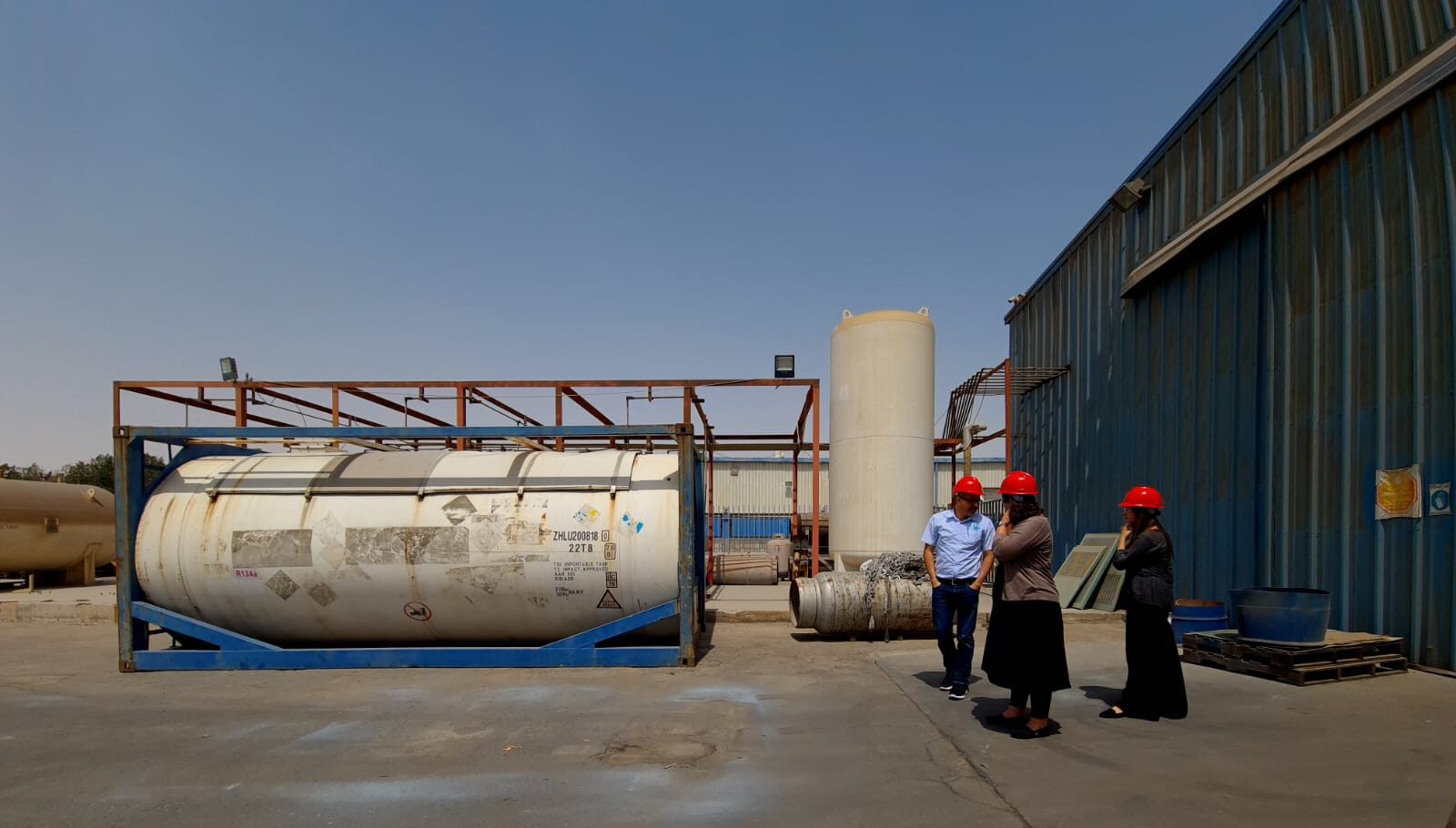
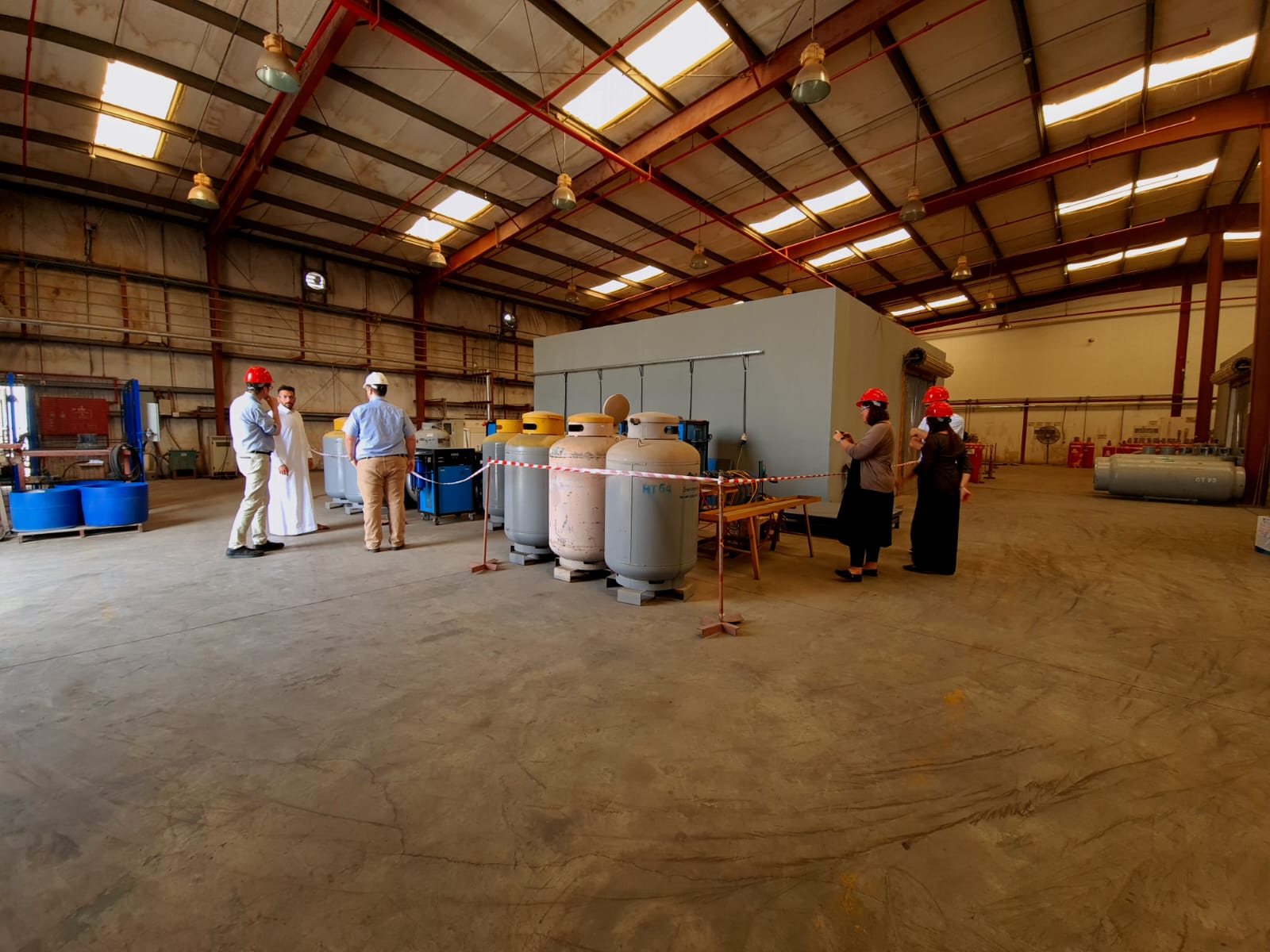
Site Visit: Cool Effect team members visited a U.S.-based Tradewater ODS destruction project in September 2023
What it does:
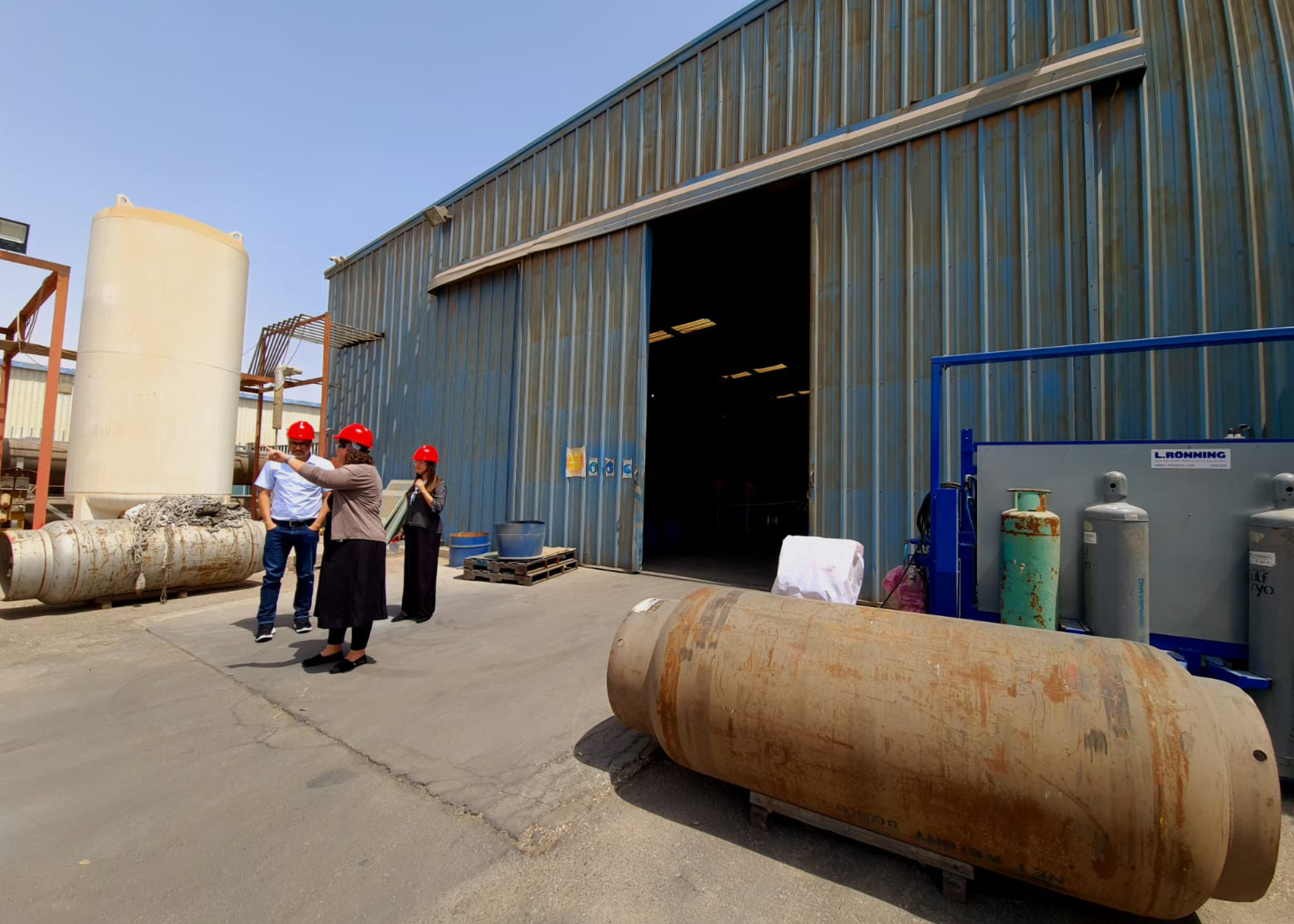
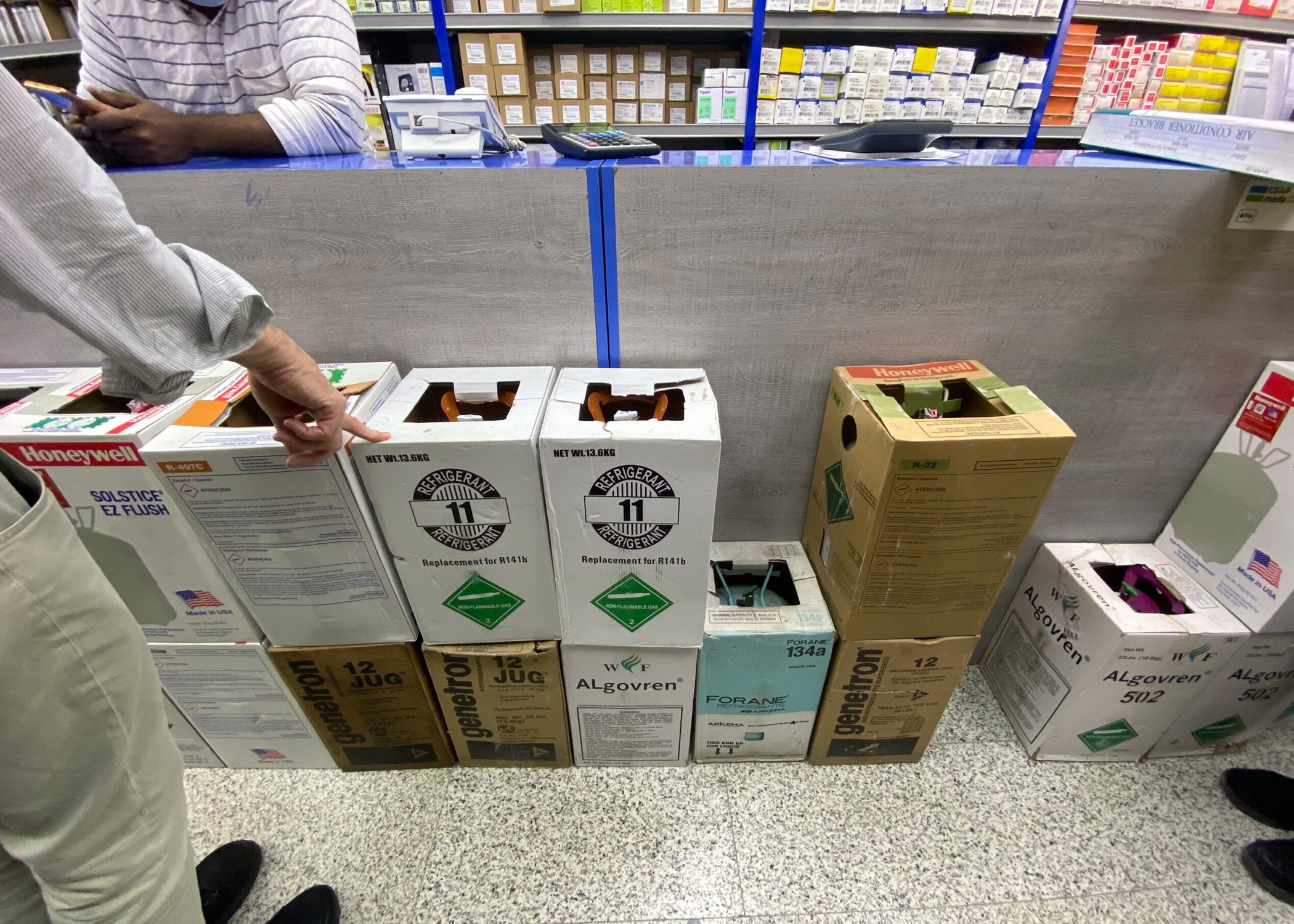
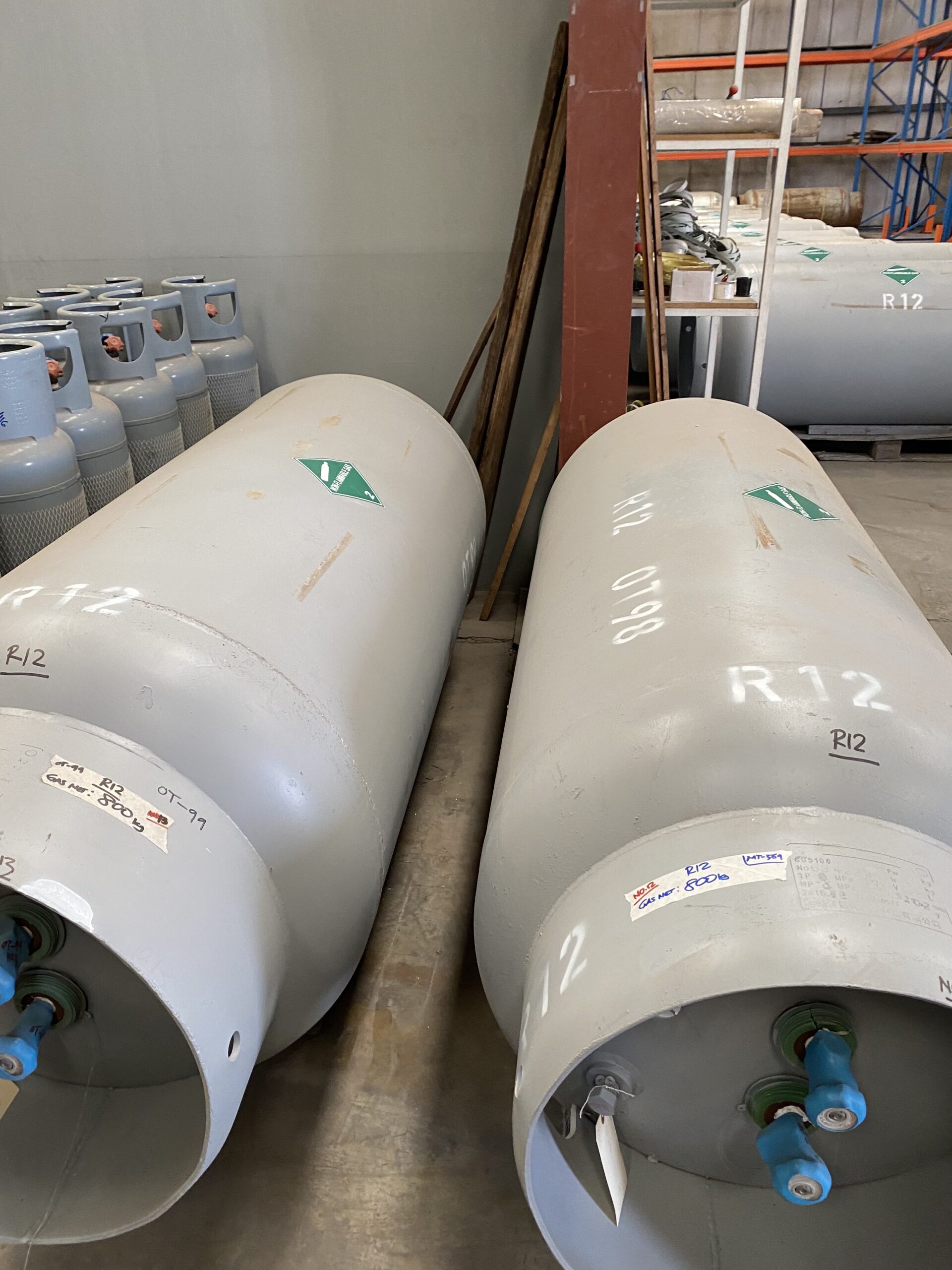
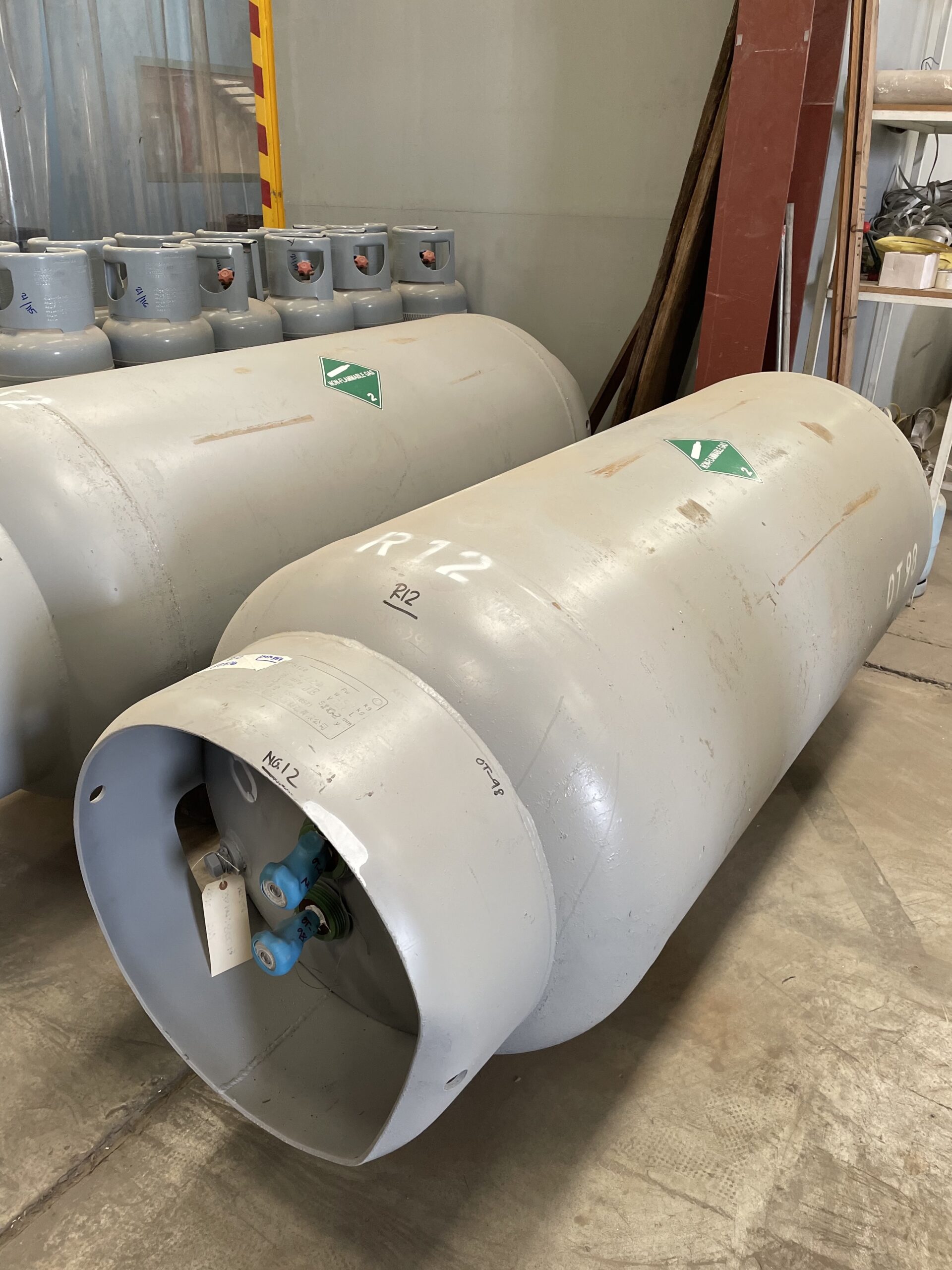
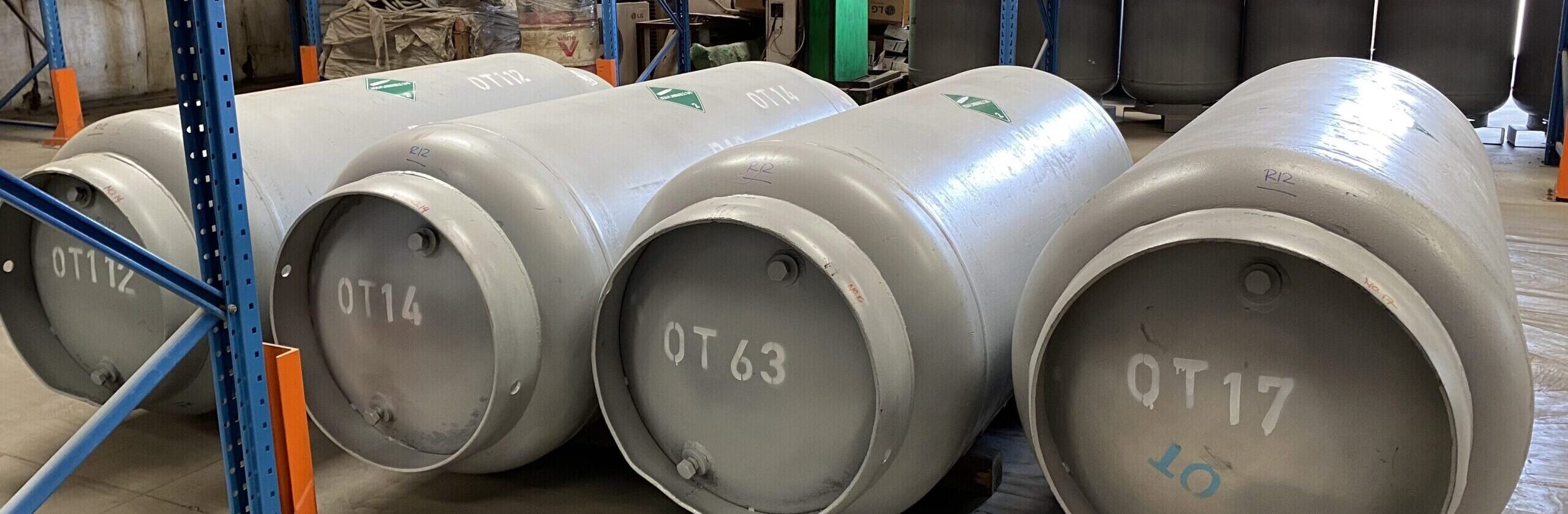
Tradewater collects and destroys ODS around the world. For this ODS project, the material was aggregated into cylinders or International Standards Organization tanks in Dammam, Saudi Arabia and shipped for destruction to a facility in Remondis, Bramsche, Germany
All ODS refrigerants in this project were collected in the Middle East. ODS was acquired from a single source, Environmental and Industrial Solutions, Co. (“EIS”), in Saudi Arabia. EIS obtained its superpollutant stock through their regular business practices of recovery and reclamation. Under business-as-usual, the ODS would eventually vent, either through leakage resulting from corrosion of the storage container or through inefficiencies, breakdowns, or mishandling of equipment. The refrigerants included in this project were no longer needed for use, and their risk of venting is thereby mitigated by destruction at an eligible destruction facility.
All the refrigerant collected is destroyed in highly regulated incinerators with continuous monitoring equipment to ensure that it meets strict international, federal, and local environmental regulations. The most important of these regulations is a requirement that at least 99.99% of the refrigerant is destroyed permanently. The other .01% includes by-products that are relatively inert and low-impact—such as carbon monoxide. Which means that at most, 0.01% of CO2 is emitted during the destruction process, while 99.99% of it is destroyed.
Tradewater accounts for the project emissions created during the collection, transport, and destruction of ODS, and the number of offsets issued is reduced by a corresponding amount. The protocol that is used also builds in other reductions to account for substitute chemicals that will be used to replace the destroyed refrigerants.
Tradewater publishes this information in the documentation for all its ODS destruction projects in a Certificate of Destruction.
Benefits:
- Refrigerants are permanently destroyed.
- Destroys refrigerants that would otherwise have no path to a destruction facility
- Transparent and quantifiable destruction with results at 99.99%
- Traceable chain of custody to a destruction facility
- High climate impact with the destruction of high GWP gas
- Contributions to SDGs 9, 12, and 13 are independently verified
Challenges:
- ODS are high Global Warming Potential (GWP) Gases and therefore precise measurement is essential to accurate estimation of emission reductions
- Highly qualified professionals are needed to operate machinery and waste.
- Limited availability of reliable incineration operations around the world.
- ODS is a hazardous waste that needs to be handled in compliance with national and international laws
AB1305:


How we select our projects
We go the extra mile, or kilometer, to make sure each project’s carbon-cutting is effective, and the use of funds is efficient.
Join Our Community of Over 500K Climate Fighters
Thanks for subscribing to our newsletter!
Sign up to receive climate news and tips on how you can make a personal impact.